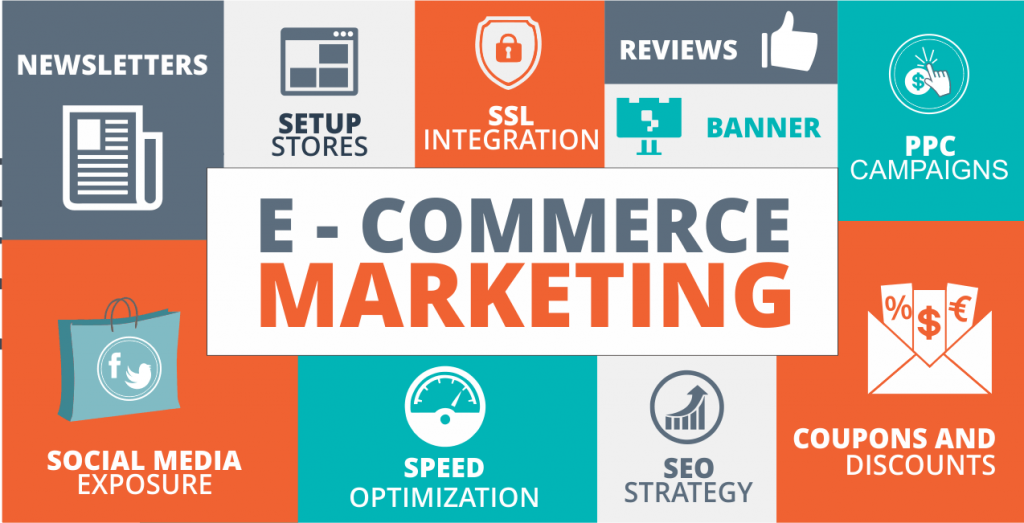
E-COMMERCE MARKETING Operating an e-commerce business in 2025 is more competitive than ever. With thousands of websites competing for your customers’ attention, success relies on intelligent, data-based marketing tactics. It’s no longer a matter of simply listing products—you need a solid digital marketing strategy that resonates with the right audience, gains trust, and converts browsers to buyers. 1. Optimize Your Website for Conversions Your site is your online store, and the impression counts. A slow, messy, or confusing site can drive customers away in an instant. Make sure loading speed is quick. Design using a mobile-friendly interface. Include good product images, descriptions, and ratings. Put a prominent call-to-action (CTA) on product and checkout pages. 2. Make Use of SEO for Organic Traffic Search Engine Optimization (SEO) is one of the most affordable methods to drive customers to your site. Optimize for long-tail keywords relevant to your products. Optimize product descriptions, meta titles, and images. Create backlinks using content marketing. Develop blog posts based on customer pain points and popular topics in your niche. 3. Conduct Paid Advertising Campaigns Pay-Per-Click (PPC) and social media advertising enable you to target a highly focused audience. Utilize Google Shopping Ads to give your products visibility. Run Facebook & Instagram Ads to visually promote your products. Retarget abandoned cart visitors with personalized promotions. 4. Leverage the Power of Email Marketing Email marketing is still one of the highest ROI digital media. Send welcome messages with discounts to new subscribers. Design abandoned cart reminders to win back lost sales. Send exclusive offers, product releases, and loyalty rewards to keep customers engaged. 5. Leverage Social Media Marketing Social media is a fantastic platform to promote your brand and interact with customers. Share interesting content such as product demos, tutorials, and user-generated content. Utilize Instagram Reels, YouTube Shorts, and TikTok to reach out to younger audiences. Partner with micro-influencers for organic promotion. 6. Invest in Content Marketing Content establishes trust and authority within your niche. Publish blog posts, how-to content, and product comparison content. Produce engaging product videos and tutorials. Employ storytelling to showcase customer success stories. 7. Use Personalization & AI Tools Personalization can make a big impact on conversions. Display product recommendations based on browsing history. Employ AI-driven chatbots for real-time customer support. Provide personalized discounts on the basis of shopping patterns. 8. Prioritize Customer Reviews & Social Proof Customers trust other customers over brands. Promote reviews and testimonials on product pages. Display user-generated content (UGC) on social media. Include trust badges and secure payments. 9. Optimize for Mobile Commerce Over 70% of online transactions occur through mobile devices. Provide a frictionless mobile checkout experience. Support digital wallets such as UPI, Apple Pay, or Google Pay. 10. Track, Analyze & Improve Lastly, track your efforts to see what is most effective. Utilize Google Analytics, Facebook Insights, and heatmaps. Track KPIs such as conversion rate, average order value, and customer lifetime value. Constantly A/B test ads, landing pages, and emails.
Effective Google Ads Strategies for Higher Conversions
Effective Google Ads Strategies for Higher Conversions Effective Google Ads Strategies for Higher Conversions Google Ads is one of the most powerful advertising platforms available today. With billions of searches happening every day, it allows businesses to reach potential customers exactly when they’re searching for relevant products or services. However, running ads without the right strategy can quickly drain your budget with little return. To get the best results, you need to focus on conversion-driven strategies. In this blog, we’ll explore proven Google Ads strategies that can maximize your conversions and ROI. 1. Conduct Thorough Keyword Research The foundation of any Google Ads campaign is targeting the right keywords. Use tools like Google Keyword Planner to identify high-intent keywords. Focus on long-tail keywords (e.g., “buy running shoes online India”) instead of broad ones (e.g., “shoes”). Regularly update your negative keywords list to avoid irrelevant clicks. 2. Craft Compelling Ad Copy Your ad copy is what convinces users to click. Include the target keyword in the headline. Highlight unique selling points (free shipping, discounts, guarantees). Use strong call-to-actions (CTA) like “Shop Now,” “Get a Free Quote,” or “Book Today.” A/B test different variations to see what drives better CTR and conversions. 3. Optimize Landing Pages for Conversions Getting clicks is only half the battle—your landing page must convert visitors. Match the ad promise with the landing page content. Use clear CTAs (e.g., Buy Now, Sign Up). Minimize distractions and ensure fast loading speed. Add social proof like testimonials, reviews, or trust badges. 4. Use Ad Extensions for More Visibility Ad extensions increase visibility and improve CTR. Sitelink Extensions: Link to specific pages like “New Arrivals” or “Contact Us.” Call Extensions: Let customers call you directly. Price Extensions: Showcase pricing upfront. Location Extensions: Ideal for local businesses to drive in-store visits. 5. Leverage Smart Bidding Strategies Google’s AI-powered bidding strategies can help maximize conversions. Target CPA (Cost Per Acquisition): Optimize for conversions within your budget. Target ROAS (Return on Ad Spend): Focus on maximizing revenue. Maximize Conversions: Let Google automatically adjust bids for the most conversions. 6. Run Remarketing Campaigns Not everyone converts on the first visit. Remarketing helps bring them back. Show ads to people who visited your website but didn’t purchase. Offer special discounts or limited-time offers. Use Dynamic Remarketing Ads to show the exact product they viewed. 7. Segment Campaigns by Audience Instead of targeting everyone, focus on specific groups. Create custom audiences based on demographics, location, and interests. Use In-Market Audiences to reach people actively searching for your products. Test Customer Match by uploading email lists for targeted campaigns. 8. Track Conversions & Use Analytics Without tracking, you can’t measure success. Set up Google Ads Conversion Tracking and link it with Google Analytics. Track conversions like purchases, form submissions, calls, or downloads. Use the data to optimize underperforming ads and scale successful ones. 9. Continuously Test & Optimize Google Ads is not a “set it and forget it” platform. Run A/B tests on ad headlines, descriptions, and CTAs. Test different bidding strategies and audience targeting. Regularly monitor performance and adjust budgets to top-performing campaigns. Final Thoughts Effective Google Ads campaigns are built on the right mix of keyword targeting, ad copy, landing page optimization, and ongoing testing. By leveraging smart bidding, remarketing, and audience segmentation, businesses can turn clicks into conversions and maximize ROI. The key is to analyze results continuously and refine your strategy—because in the fast-changing digital landscape, optimization is what keeps you ahead of the competition.

Top Digital Marketing Strategies for Small Businesses in 2025
Home About Services Content Marketing SEO Social Media Marketing Search Engine Marketing Graphic Designing Web Development Blog Home About Services Content Marketing SEO Social Media Marketing Search Engine Marketing Graphic Designing Web Development Blog Contact us Top Digital Marketing Strategies for Small Businesses in 2025 Top Digital Marketing Strategies for Small Businesses in 2025 The digital world is evolving rapidly, and small businesses must adapt to stay competitive. With rising customer expectations, AI-driven tools, and new content trends, digital marketing in 2025 is all about personalization, authenticity, and smart use of technology. If you’re a small business owner looking to grow, here are the top digital marketing strategies you should focus on in 2025. 1. Local SEO & Voice Search More customers are searching with phrases like “best café near me” or asking voice assistants for recommendations. Optimize your Google Business Profile. Collect customer reviews for credibility. Use conversational keywords for voice search optimization. 2. Short-Form Video Marketing Reels, YouTube Shorts, and TikTok dominate user attention. Share behind-the-scenes clips, tutorials, or product demos. Use trending sounds and hashtags for reach. Encourage user-generated content for authenticity. 3. AI-Powered Personalization Artificial Intelligence is no longer optional—it’s essential. Use AI chatbots for instant customer service. Personalize product recommendations and email offers. Analyze customer data to predict buying behavior. 4. Content Marketing with E-E-A-T Google values content with Experience, Expertise, Authoritativeness, and Trustworthiness (E-E-A-T). Publish blogs answering customer pain points. Share case studies and customer success stories. Repurpose blogs into videos, carousels, or infographics. 5. Paid Advertising on a Budget Running ads doesn’t require huge budgets if done strategically. Use Google Ads for high-intent searches. Run Facebook & Instagram Ads with precise targeting. Apply retargeting campaigns to bring back website visitors. 6. Email & WhatsApp Marketing Direct messaging channels deliver some of the highest ROI. Build an email list and send exclusive offers. Use WhatsApp Business for promotions and reminders. Segment your audience for personalized campaigns. 7. Live Streaming & Interactive Content Real-time engagement builds trust and loyalty. Host Q&A sessions, product launches, or live demos. Use polls, quizzes, and interactive posts to engage your audience. Collaborate with influencers for live events. 8. Customer Experience as a Marketing Tool A smooth shopping experience is the best marketing strategy. Ensure fast-loading, mobile-friendly websites. Offer secure, easy payments like UPI or Apple Pay. Reward loyal customers with discounts or early access. 9. Sustainable & Value-Driven Branding Today’s consumers want brands that share their values. Highlight eco-friendly practices. Support local communities. Showcase transparency in sourcing and operations. 10. Data-Driven Marketing In 2025, data is king for making smart decisions. Use Google Analytics 4 (GA4) to track customer behavior. Test different ad copies, CTAs, and landing pages. Focus on KPIs like conversion rates and customer lifetime value. Final Thoughts For small businesses, the key to digital marketing success in 2025 is balancing technology with human connection. AI, short-form content, and data will drive efficiency, while personalization, trust, and authenticity will build lasting customer relationships. Start small, focus on the strategies that fit your goals, and scale as you grow—because in the digital era, consistency wins.